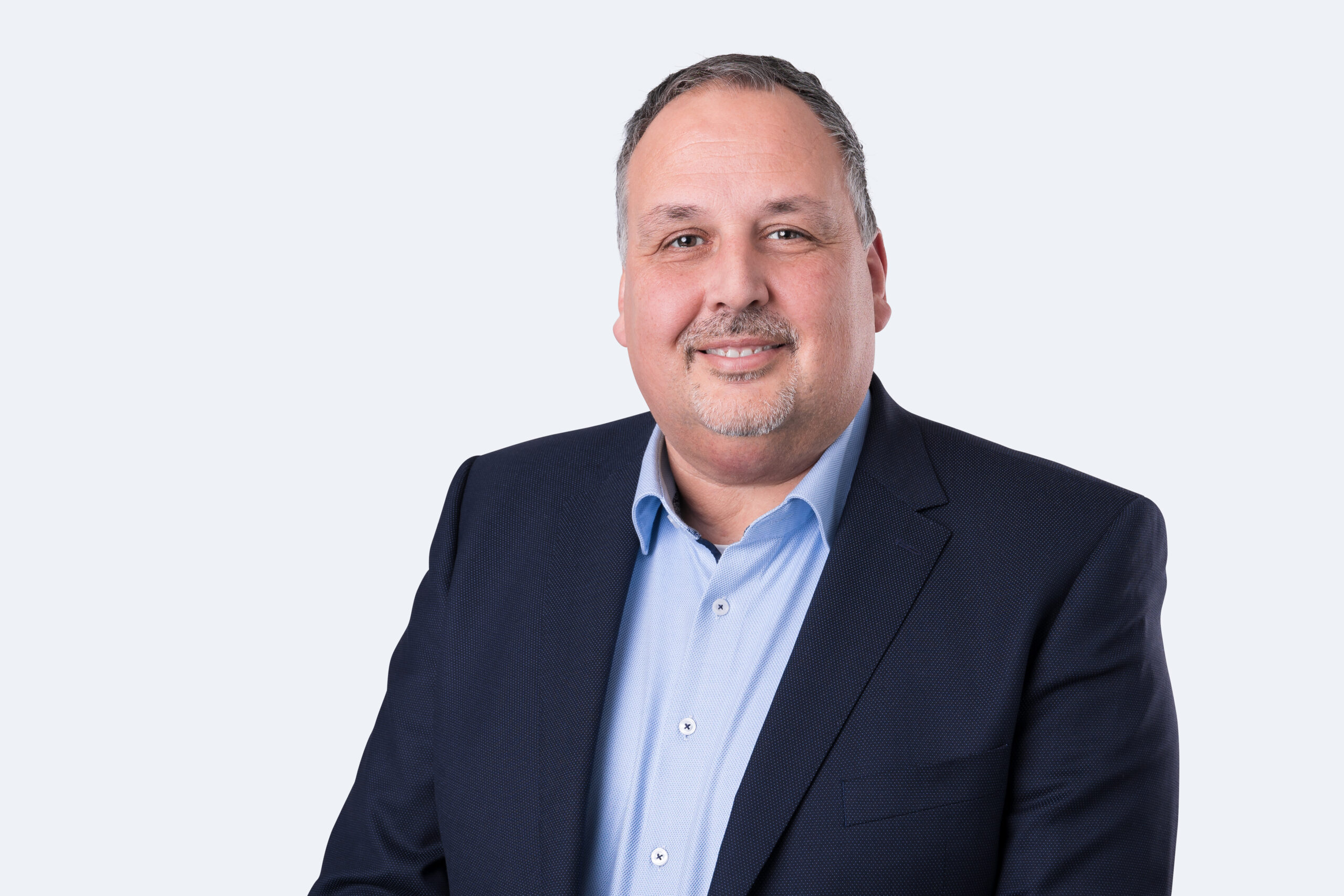
Henk van Ingen, Manager of Labor Costs and Productivity Development at DEEN Supermarkets, has been a leading figure in the field of workforce management (WFM) for years. Thanks to his in-depth knowledge of the food retail industry, his extensive experience in human resources management, and his status as a thought leader, Henk is rightly regarded as an expert in the market.
The workforce management market is constantly evolving. Technological advancements are coming in rapid succession. Furthermore, the food retail sector is, of course, also very dynamic. That’s why we invited Henk to participate in an expert interview. In this in-depth interview, Henk discusses, among other things, the impact of current and future trends, strategic challenges, the evolution of WFM in DEEN supermarkets, and the role of the WFM specialist of the future.
For years, DEEN supermarkets have been known for, among other things, their customer and employee experience, unique traditional products, sustainable business practices, and their outstanding selection of flowers and plants. It is a true family-owned business, and this is reflected in the eighty DEEN stores.
“Thanks to friendly staff and a store where you feel comfortable and can easily find your way around. But with DEEN’s delicious products, you’ll always head home feeling good. Because you never pay too much, and with DEEN’s delicious and unique products, you’re always sure to succeed at home.” With this approach, DEEN has been a solid player in the Dutch food retail market for many years.
It was recently announced that the DEEN supermarkets are to be sold to Albert Heijn, Vomar, and DekaMarkt. In a recently published press release, DEEN emphasized that this was a deliberate strategic decision with an eye toward the future: “We are truly being sold as a solid and healthy company with a good reputation in the market.” The decision was made primarily because the management and the family behind DEEN believe that developments in e-commerce and the associated investments are not a good fit for their company. It is therefore a logical choice. At the moment, the stores are still operating under the DEEN name; the transition to the new brands is expected to take place in September of this year.”
The acquisition of DEEN naturally also marks the end of the fruitful collaboration between DEEN and R&R and the wonderful results achieved during that time. We are proud of the joint developments and the journey we have taken together with everyone involved. We will discuss this in more detail in this interview.
“How can we best support DEEN supermarkets in the area of WFM, in line with their vision, culture, and core values? With this in mind, we’ve begun to support the organization in a pragmatic way. In doing so, we’ve placed the most important changes in the hands of the employees themselves. In my opinion, this is also the right approach. It allows us to shape change in a sustainable way and empower people. Currently, 335 department heads are proactively making the best decisions every day because you have provided them with the right insights and tools. This gives people—and the entire organization—confidence and strength. You don’t think for the department head; instead, you inspire employees to think for the organization.”
R&R's software is ideally suited for this purpose. DEEN's employees are now very familiar with R&R. It provides employees with the insights they need on a daily basis to make the right decisions on their own.
“Right now, 335 department heads are proactively making the best decisions every day because you have given them the right tools, insights, and procedures. This gives people peace of mind and strength, and it strengthens the entire organization.”
In doing so, we have placed the most important changes in the hands of the employees themselves. In my opinion, this is also the right approach. It allows us to shape change in a sustainable way and empower people. Currently, 335 department heads are proactively making the best decisions every day because you have provided them with the right insights and tools. This gives people—and the entire organization—a sense of security and strength. You don’t think for the department head; instead, you inspire employees to think for the organization. R&R’s software is ideally suited for this. DEEN’s employees are now very familiar with R&R. It provides employees with the daily insights they need to make the right decisions on their own.”
“As an HR manager, it is always very important to connect the various policy areas within the organization. You are the ‘linking pin’ in this matter. After all, WFM has a major impact on many different areas of the company. Think of management, logistics, finance, human resources, and, of course, all the people who work with it every day. Because without connection, there is no support and no synergy. In a synergistic model, everyone benefits from the change, and there is a mutual commitment to succeed together.”
Henk can thus look back on a wonderful journey we’ve taken together, one marked by both “hard” and “soft” measurable results. “We started with incremental steps and continued to optimize them. Through our joint efforts, we’ve achieved some truly impressive results—in a way that’s fully aligned with DEEN’s organization and strategy. Among other things, this has involved gaining more and better insight, access, and control over labor costs and productivity, with the goal of deploying the right staff at the right time. That sounds very logical and simple, but it isn’t.”
This, in turn, has a direct positive impact on employee satisfaction and the customer experience. That is why I am truly proud of what we have achieved. I am therefore very grateful to Leendert van Eck (Director) for giving me the opportunity to develop WFM at DEEN in the right way and to promote it within the organization.”
E-commerce and home delivery are major trends in the food retail sector. Henk sees a clear difference between the urban and rural environments in which these companies operate. “Of course, it’s important to look at the rise of companies like Picnic and Gorillas. The impact is different in urban areas than in rural areas. Companies like Picnic and Gorillas are currently emerging in cities. The question is whether this model will also work on a national scale.”
All market participants are grappling with the question of how online delivery can be made practical and profitable, but so far, no one has succeeded. This is because, even when factoring in investments, there is still no online provider that has proven to be profitable.
I therefore expect that such a player will have to generate its profits in another area. In the long term, this is, of course, necessary in order to remain competitive and survive. So it remains to be seen what the actual impact will be, but it’s clear that it will have an effect on the market.
The question, of course, is how “traditional supermarkets” will respond to this. After all, they, too, have the (limited) capabilities and distribution networks to add this type of service to their existing operations. It’s no coincidence that only two Dutch supermarkets have a solid and fully integrated omnichannel strategy.”
E-commerce and home delivery are major trends in the food retail industry. Henk sees a clear difference between the urban and rural environments in which the companies operate. “Of course, it’s important to engage with the Op
Henk has already indicated that workforce management plays a strategic role within DEEN. The challenges in the areas of labor costs, planning, and productivity are therefore increasingly strategic in nature. “The focus is increasingly on formulating strategic goals and policies. Of course, this also applies from a financial perspective, because there has to be a positive business case. Ultimately, however, the customer must always be the center of attention. With a good WFM policy, you give them the opportunity to make better decisions based on the right information. Furthermore, recruiting and retaining the right employees is a major challenge for many supermarkets.
"Fortunately, we at DEEN have no problems with hiring and retaining staff. That’s something special and truly a compliment to the entire organization."
When asked what the WFM package and the role of the WFM manager of the future will look like, Henk envisions a situation in which WFM and strategic human resources will become increasingly intertwined: “You’re in a model of mutual dependence with your employees. A good human resources policy ensures that this is upheld in collaboration and within the organization. Change management plays a crucial role in this. The most important thing is that the change fits into the organization’s culture and that there is broad support for the collective change. A good WFM specialist is constantly working on this.”
“Change management plays a key role in WFM. The most important thing is that the change aligns with the culture and that there is broad support for the collective transformation.
In addition, you can see that trends such as centralized planning, automated scheduling, and the ability to make data-driven decisions can influence the WFM market. The question, however, is whether this can be (fully) automated, given the large number of employees, the turnover rate, the variety of functions, and the different roles within the supermarket.
The WFM package of the future is the one that offers the greatest flexibility and can help create value in a constantly changing market. A good example is the extremely busy period during the first lockdown. We went from a very quiet period to a rush that we normally only experience at Christmas.
Not only did we gain more customers, but those customers also purchased more. The impact was felt on all fronts. The DEEN team responded well overall. Logistics and the online store ensured that the store ran very smoothly. By using the R&R Job App, we were able to provide the additional services needed through an enthusiastic group of employees. Our part-time staff were called in for a shift. These are just a few examples. This is partly due to our positive company culture, in which everyone is willing to help and support one another in such situations.
As a result, peace prevails even during an unexpectedly hectic time. I think this is a good example of how to be agile and flexible. For us, R&R was the tool that made this possible.
Supermarkets are also seeing developments in the areas of new business models and store management: overhead costs are being automated, and expertise and value creation on the sales floor are increasing. Administration is becoming increasingly decentralized.
Ultimately, Darwin’s law applies: The organization that is the most adaptable has the best chance of achieving positive results. The winners are always the businesses that have a plan—but a plan that leaves room for flexibility, agility, and pragmatism.”
Finally, with the sale of DEEN, the long-standing and pleasant collaboration between DEEN and R&R has unfortunately come to an end. But just like Henk, we are proud of what we have achieved together, and we look back on a wonderful time during which we, too, learned a great deal. We hope that this positive momentum will continue under the new ownership.
On behalf of R&R, we would like to thank all DEEN employees for the pleasant collaboration and wish them all the best for the future!